
Designing for Well-Being: Why Biophilic Design Matters

That is why a room with natural light, a view of trees, fresh air, or even the texture of wood can just seem to be a better one.
We have a natural tendency to connect with nature; biophilic design harnesses that instinct and incorporates it into the environments in which we live, work, learn, heal and gather.
It's not just a matter of putting a few plants in a room to achieve biophilic design.
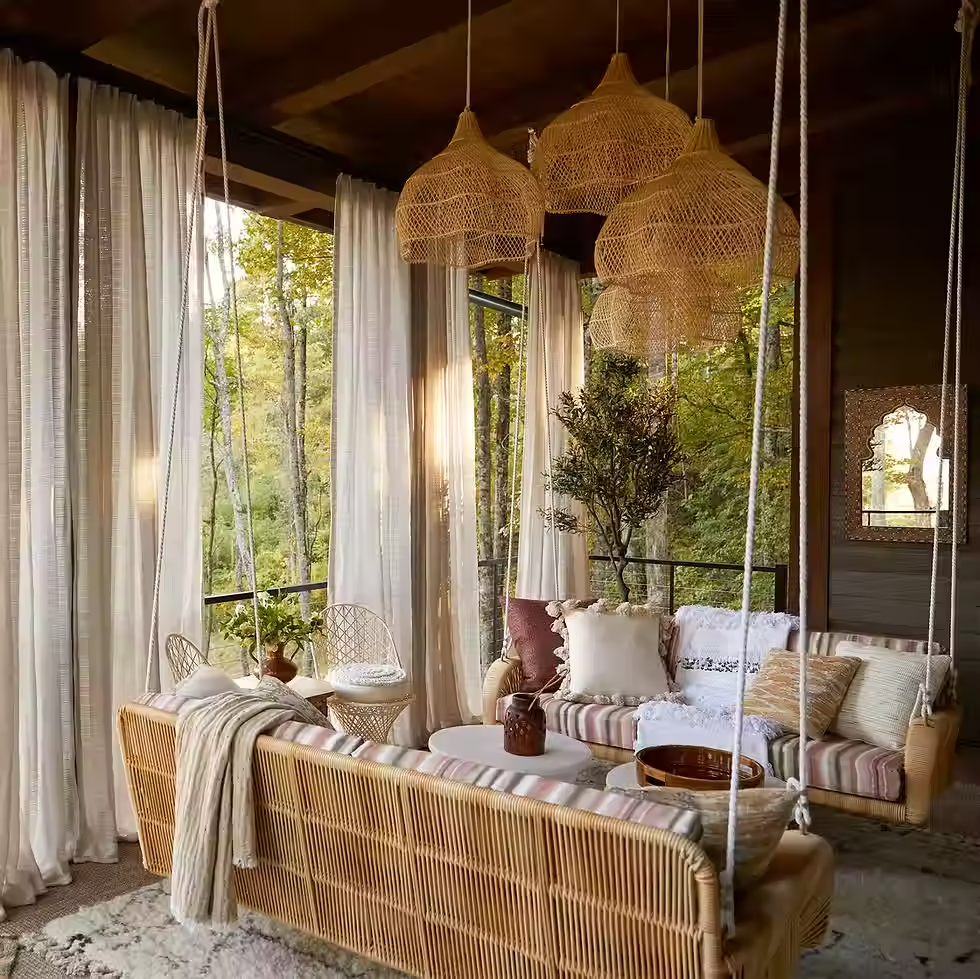
Bringing Nature Into the Experience
A very common method is to link people directly with nature by means of daylight, views, plants, water, fresh air, natural sounds, and the varying conditions over the course of the day and the seasons.

The impact of these details on the way a space feels and on people's experience of it can be surprisingly great.
Taking Cues From Nature
Nature also provides us with an amazing range of design elements.
Environments can seem familiar and interesting without having to be literal because of organic shapes, natural materials, patterns, textures, and a sense of complexity and order.
For example, a stone surface, the grain of wood, a branching pattern, or a gently curved shape can call up images of nature without attempting to reproduce it.

Designing for How People Feel
The psychology of space is also taken into account in biophilic design.
A large room could provide a wide view which gives us the feeling of having a prospect, or it might have a secluded spot that offers refuge, or it might include an area that is partly hidden and thus creates a bit of curiosity and mystery.

Although these experiences are subtle they do affect the way we move around and react to our environment.
Why It Matters
Research has found that having a meaningful connection with nature leads to lower stress levels, better cognitive function, increased creativity, and an improved sense of well-being. The aim is not to design every space so that it resembles a botanical garden; rather, it is to produce environments that align with our natural instincts instead of going against them.
For Blue Logic, design becomes interesting here.

We think that the most effective spaces achieve more than just appearing attractive; they provide an experience which can make people feel at ease, inspired, focused, connected, or even just a bit more comfortable.
At other times it's a broad perspective, and at other times it's the quality of the light, the texture of the material, the way the air moves, or a quiet moment situated away from the surrounding activity.
Success in design isn't always obvious.
There are times when you simply walk in and feel pleased.

Comments