
Transform Your As-Built Drawings with Blue Logic's Advanced Matterport Technology
- David L. Brehm

- May 22
- 2 min read

Accurate as-built drawings are essential for architects, engineers, and construction professionals who need precise information about existing structures. Yet, traditional methods of creating these drawings can be time-consuming, prone to errors, and often lack the detail required for complex projects. Blue Logic offers a solution that changes this process by using advanced Matterport technology to capture detailed point clouds and build reliable BIM models.
How Matterport Technology Enhances As-Built Drawings

Matterport cameras capture 3D spatial data quickly and with high accuracy. This technology scans entire spaces, creating detailed point clouds that represent every surface and feature of a building. These point clouds serve as the foundation for creating precise as-built drawings.

Using Matterport technology, Blue Logic can:
Capture complex geometries with millimeter accuracy
Reduce time spent on site by scanning entire areas in a single session
Minimize human error by relying on automated data collection
Provide visual context with immersive 3D models that complement technical drawings
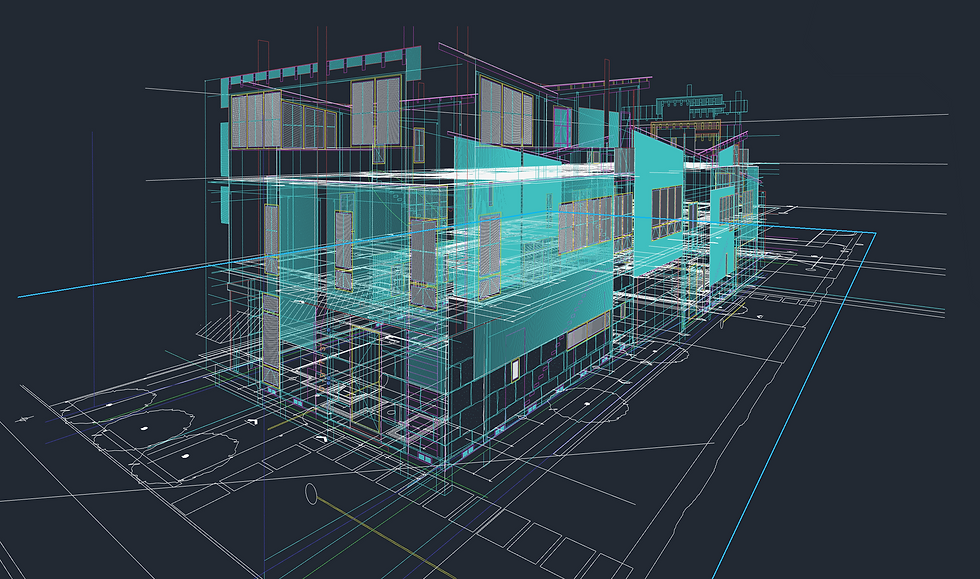
This approach allows architects and engineers to work with data that reflects the true conditions of a building, improving decision-making and reducing costly rework.
Benefits of Using Blue Logic’s BIM Models

Building Information Modeling (BIM) takes the point cloud data from Matterport scans and transforms it into detailed digital models. These models include not only geometry but also metadata about materials, dimensions, and structural elements.
Blue Logic’s BIM models offer several advantages:
Improved collaboration across teams by sharing a single, accurate model
Easier clash detection to identify potential conflicts before construction
Streamlined renovation planning by visualizing existing conditions clearly
Better facility management through detailed digital records of the building
For example, a recent project involved scanning a historic office building where original blueprints were missing. Blue Logic’s BIM model allowed the renovation team to plan structural upgrades without guesswork, saving weeks of survey time and avoiding unexpected issues during construction.
Practical Applications for Architecture Firms

Architecture firms working on renovations, additions, or restorations can benefit greatly from Blue Logic’s services. The combination of Matterport scanning and BIM modeling supports:
Accurate site analysis before design begins
Verification of contractor work against as-built conditions
Documentation for compliance and permits
Efficient handover of project data to clients and facility managers
By integrating these technologies, firms can deliver projects faster and with greater confidence in the accuracy of their drawings.
Next Steps to Improve Your As-Built Drawings
If your firm struggles with outdated or inaccurate as-built drawings, consider how Blue Logic’s Matterport technology can help. Start by scheduling a scan of your project site to see how detailed point clouds and BIM models can improve your workflow.

Comments